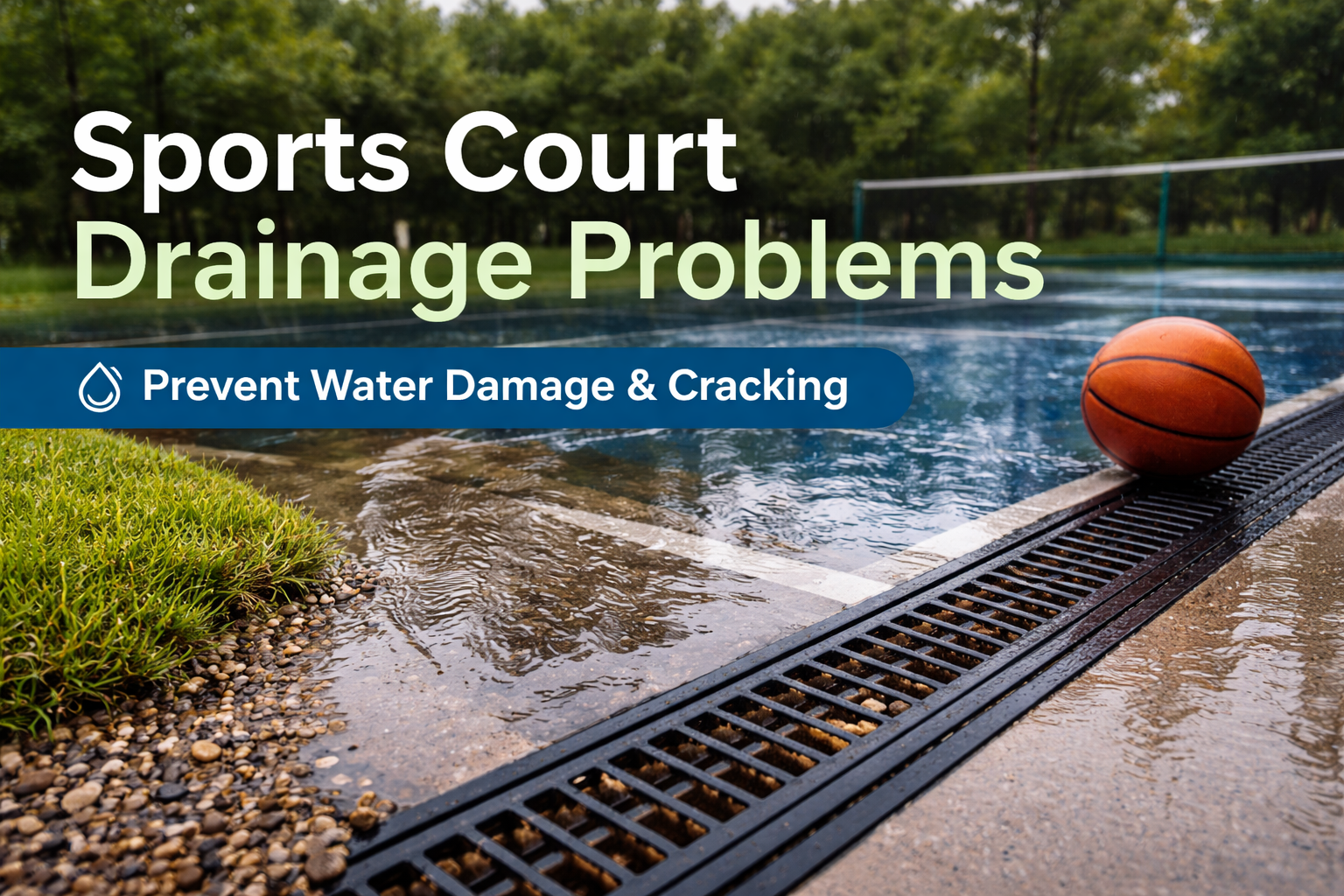
Sports Court Drainage Problems: Why Water Is the Biggest Enemy
Sports court drainage problems are a leading cause of cracking, uneven surfaces, and early court failure. Learn why drainage matters…

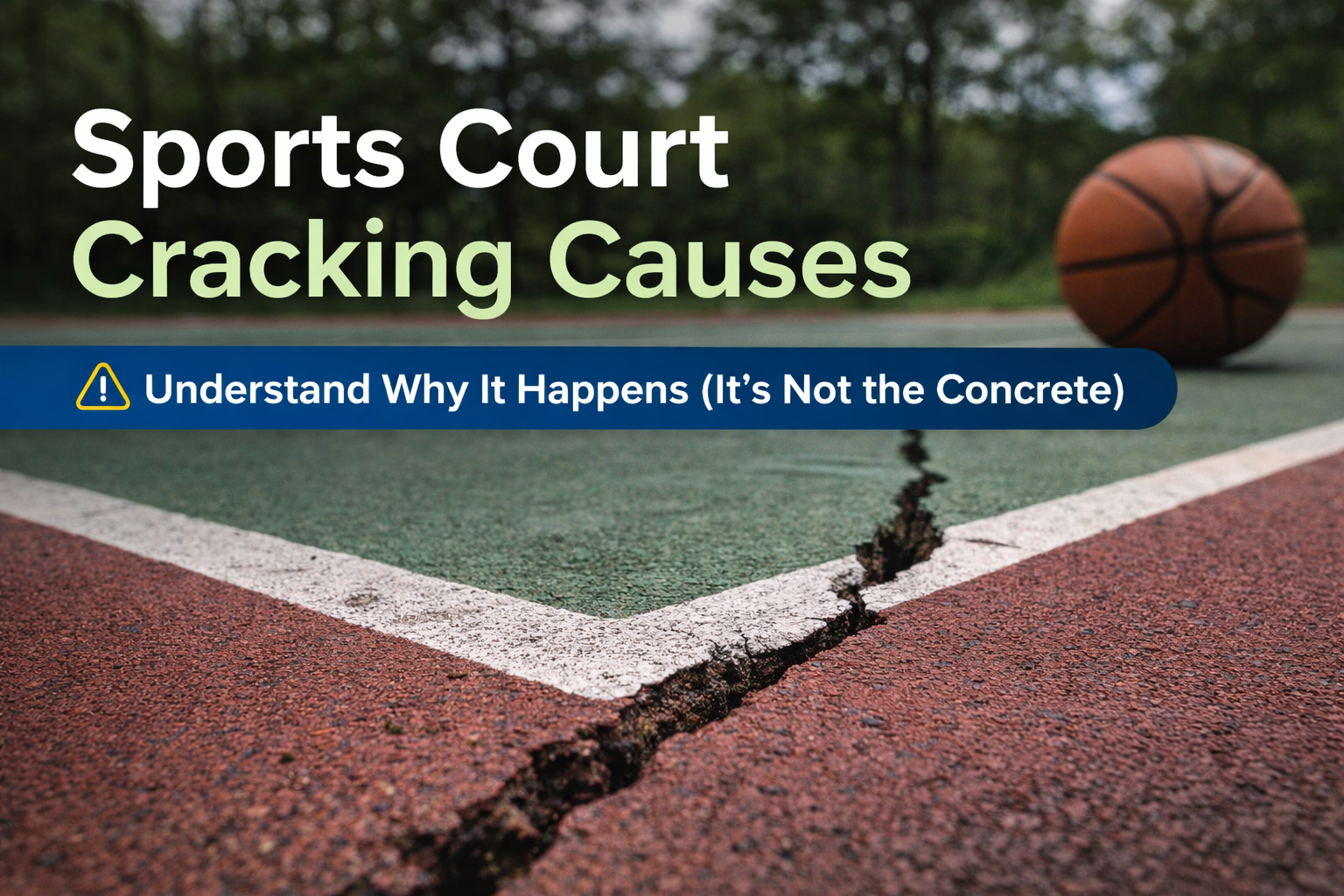
Understanding why sports courts crack and what actually prevents it can help homeowners make better decisions before investing in construction, repairs, or resurfacing.
Cracks in a sports court can feel frustrating, especially when the materials were supposed to be “high quality” and the installation seemed straightforward. Many homeowners assume cracking means something went wrong with the concrete or asphalt itself.
In reality, sports courts rarely crack because of bad surface materials. Most failures begin beneath the surface, long before the first game is played.
Some cracks take years to show up. Others appear within the first few seasons. When cracking happens early, it’s usually a signal that the court wasn’t designed as a complete system.
Sports courts are rigid surfaces. They don’t flex the way turf or soil does. When movement happens underneath, even small amounts, that movement transfers directly to the surface.
This is why cracks often appear:
The surface is simply responding to conditions below it.
Water is the most common contributor to court failure. When water isn’t properly directed away from the court structure, it:
Over time, this creates uneven support. Even a well-poured surface will crack when the base beneath it shifts.
Proper court construction always starts with planned drainage, not surface selection.
The base layer is what supports the court long-term. If it’s rushed, uneven, or improperly compacted, the surface above it is almost guaranteed to fail. Common base-related issues include:
These shortcuts often aren’t visible once the court is finished — but they show themselves later through cracking and uneven play.
Soil conditions vary widely across Long Island. Some soils drain well. Others retain moisture and expand or contract seasonally.
When soil movement isn’t accounted for during planning, it places stress on the court structure year after year. Freeze-thaw cycles amplify this movement, especially when water is trapped beneath the surface.
This is why site evaluation matters just as much as construction.
High-quality concrete or asphalt can’t compensate for poor planning underneath.
Surface materials are designed to perform when they’re properly supported. When drainage, base prep, and soil conditions aren’t addressed, even the best materials are forced to absorb movement they weren’t designed to handle.
This is also why resurfacing alone often fails to solve cracking problems. If the underlying issues remain, cracks usually return — sometimes within a year or two.
Preventing cracks starts long before installation day. A planning-first approach focuses on:
When these elements are addressed upfront, the surface can perform as intended — consistently and predictably.
This approach doesn’t eliminate all wear over time, but it dramatically reduces early failure and costly repairs.
Not all cracks require rebuilding. Some surface-level cracks can be addressed through resurfacing or localized repairs.
However, cracking often signals deeper issues when:
In these cases, repairing the surface without addressing the underlying structure usually leads to repeated failures.
Understanding the difference between surface wear and structural problems helps homeowners decide when repair makes sense — and when rebuilding is the more responsible long-term option.
Sports courts are long-term investments. Their performance depends far more on planning and preparation than on surface materials alone.
If you’re considering a new court, repairs, or resurfacing, taking the time to understand what happens beneath the surface can help you avoid unnecessary costs and frustration later.
If you’re in the planning phase, our Court Planning Checklist outlines the most important factors to consider before construction begins — from drainage to base preparation to site evaluation.
Download the Court Planning Checklist to make more informed decisions before committing to a build or repair.